Diplomatic Enclave
THE INDIAN HIGH COMMISSIONER TO GREAT BRITAIN OCCUPIES A PLACE IN HISTORY — LITERALLY. HE LIVES IN STATELY SPLENDOUR IN A MANSION IN KENSINGTON PALACE GARDENS THAT DATES BACK TO 1854.
Kensington Palace Gardens. Ancient and very rich in history, it is the ultimate exclusive address in London. Situated just a stone’s throw away from the Royal Kensington Palace (where Diana, Princess of Wales resides) amidst a row of other diplomat mansions, is the residence of the Indian High Commissioner — Dr. L. M. Singhvi.
The Kensington Palace Gardens, as its name suggests, were the gardens of the palace in the 19th century. Called ‘The Wilderness’, it was laid out by Queen Anne. It was in 1843 that some 20 plots were leased out by the palace. However, 9 Kensington Palace was only built in 1854 — prompting Dr. Singhvi to say, “This is one of the newest of the old houses built.”
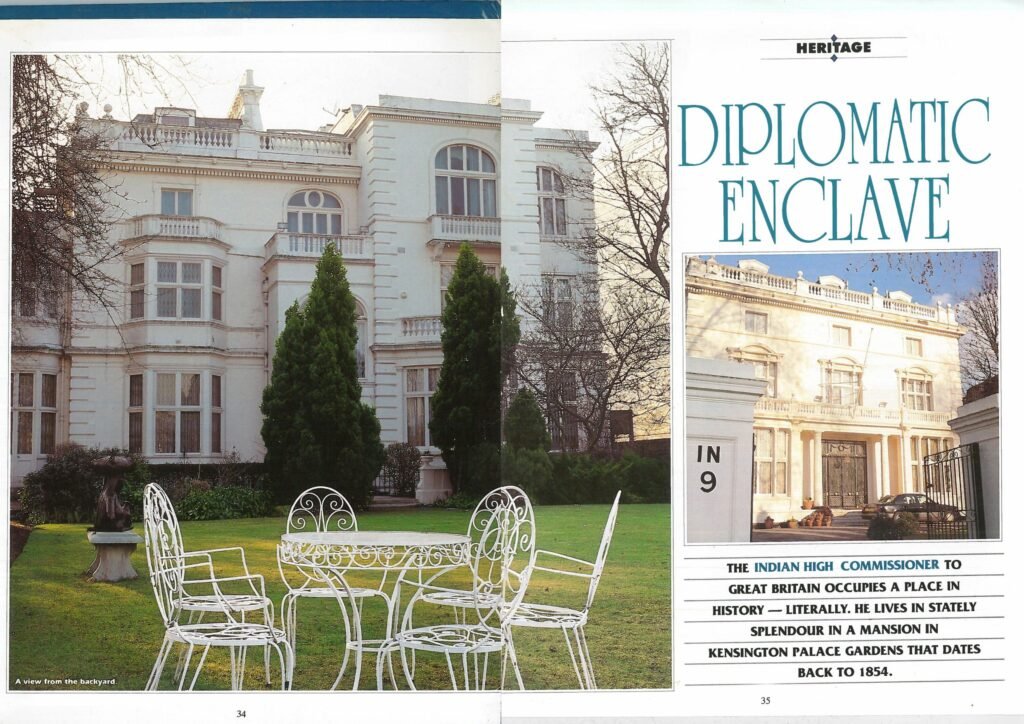
Designed by one Sidney Smirke, from 1854 to 1949, the year the Indian Government acquired the property, it changed hands quite regularly. However, in 1938 it was acquired by Mrs. Lorraine Manville Dresselhuys, who is perhaps responsible for most of the interior decoration. She was, after all, the wife of a wealthy American architect. In 1981, erstwhile Indian Prime Minister Indira Gandhi herself took a personal interest in beautifying the house.
The two-storey mansion, built on two acres of land, is reached by a small pathway from the main gate flanked by a mini-lawn. Sandwiched between two square windows, the entrance projects from the main façade on the ground floor. Supported by iron columns on sills, the main entrance leads into the hallway — where you are greeted by a 19th century Tanjore (with countless Hindu deities wedged on it) and a lamp that signifies divine blessings to all those who step in. Not surprisingly, one feels the traditional warmth instantly.
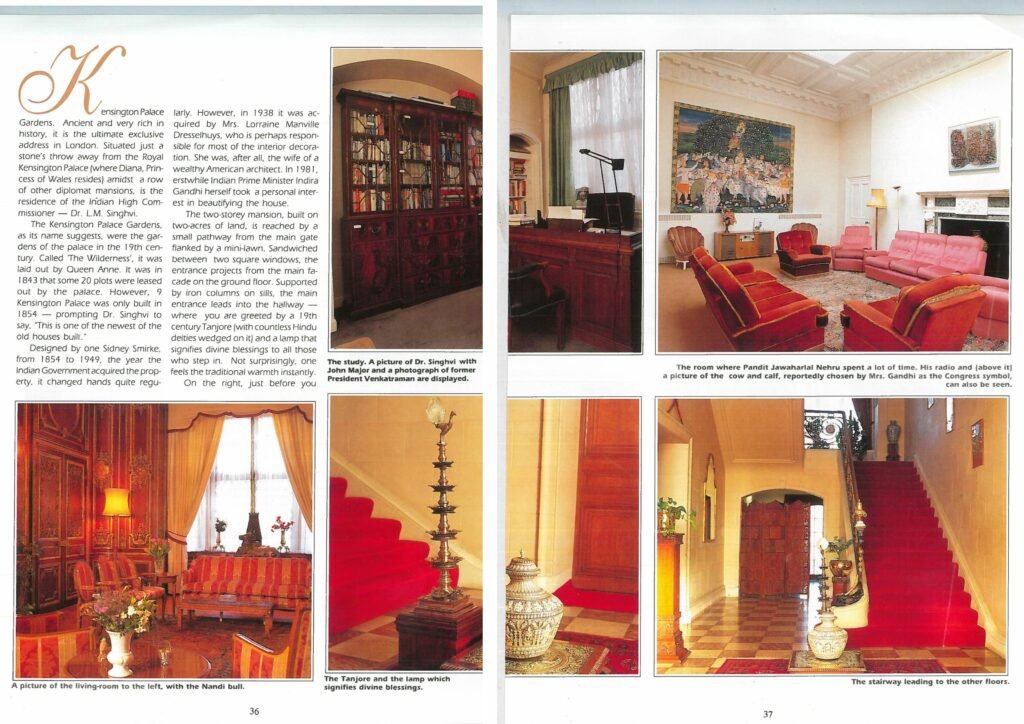
On the right, just before you enter the living-room, is a statue of Lord Ganesh from South India made from the bark of a tree. In fact, the entire ground floor is crowned by a plain cornice and surrounded by a balustrade at the first-floor level. But it is the main living-room to the right of the hallway, that transports you to a bygone era. The symmetrically built room stands out in all its grandeur and quite easily takes your breath away.
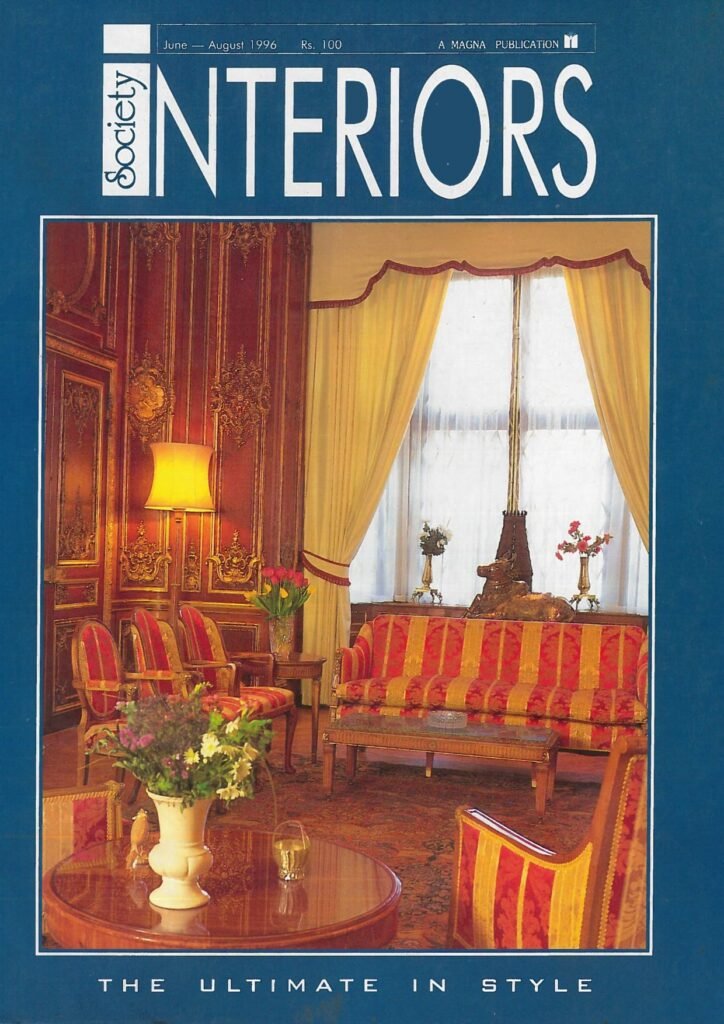
The entrance on either side of the wood-panelled walls is decorated with pilasters of an amalgamated Doric order. The interior of the entire wall is painted with gold panels depicting cherubic subjects. These are clearly seen on the right and left sides of the halls. “It is very difficult to say how old they are,” regrets Dr. Singhvi. But one look at it convinces you of its antiquity. The signs are only too evident, for there are cracks on some of the wood-panelled walls. And Dr. Singhvi is in two minds about whether he should renovate it or “let old be gold”.
The living-room has two marble fireplaces and pier glasses to complete the ancient look. The beige curtains complement the wooden flooring and furnishings which were chosen by the Singhvis. In fact, apart from the Kashmiri carpets, they are the only changes made by the present occupants. “It has a capacity of 150 people,” says Dr. Singhvi (referring to the living-room), which is perhaps the reason why he does a lot of entertaining in this room. “In fact, the wedding of Dr. Ajay Kakkar, son of Dr. Vijay Kakkar, was held here,” he discloses proudly. Besides, it has been the venue for various meetings and kavi sammelans, and well-known artistes like Ustad Allah Rakha and Lata Mangeshkar have performed here.
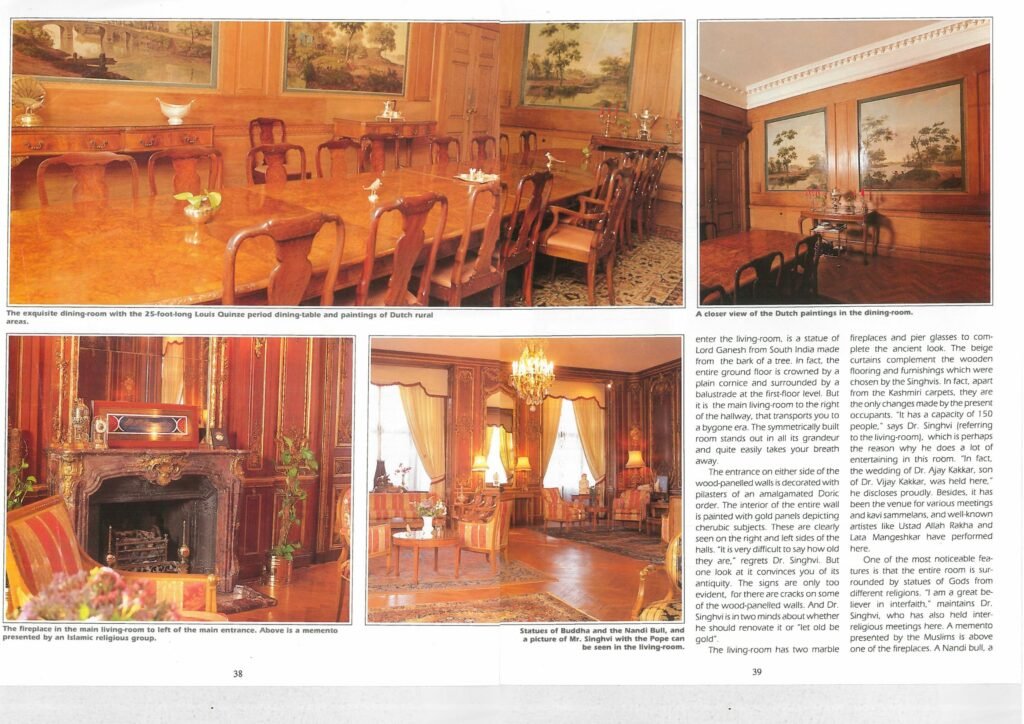
One of the most noticeable features is that the entire room is surrounded by statues of Gods from different religions. “I am a great believer in interfaith,” maintains Dr. Singhvi, who has also held inter-religious meetings here. A memento presented by the Muslims is above one of the fireplaces. A Nandi bull, a statue of Buddha, photographs of Dr. and Mrs. Singhvi with the Pope and with the Archbishop of Canterbury, add a personal touch to the room.
On the ground floor itself, the left side of the hallway leads you to the exceptionally elegant and princely dining-room. A 25-foot-long Louis Quinze table catches your eye instantly. But it is the beautiful landscape paintings that are breathtaking. The paintings of Dutch rural settings were masterminded by Mrs. Dresselhuys, being originally Dutch herself.
The mansion has three rooms on the first floor, including a guest room. Ditto on the second. “I have a very busy schedule, but I do snatch a moment or two in my study (which is situated on the first floor, overlooking the lush green gardens),” discloses Dr. Singhvi.
On the second floor, to the left, is a room where Pandit Jawaharlal Nehru spent most of his time while in London. In fact, the radio he listened to lies untouched. One of the most significant paintings here is that of the cow and calf, which (according to Dr. Singhvi) was the original symbol chosen by Mrs. Gandhi for the Congress.
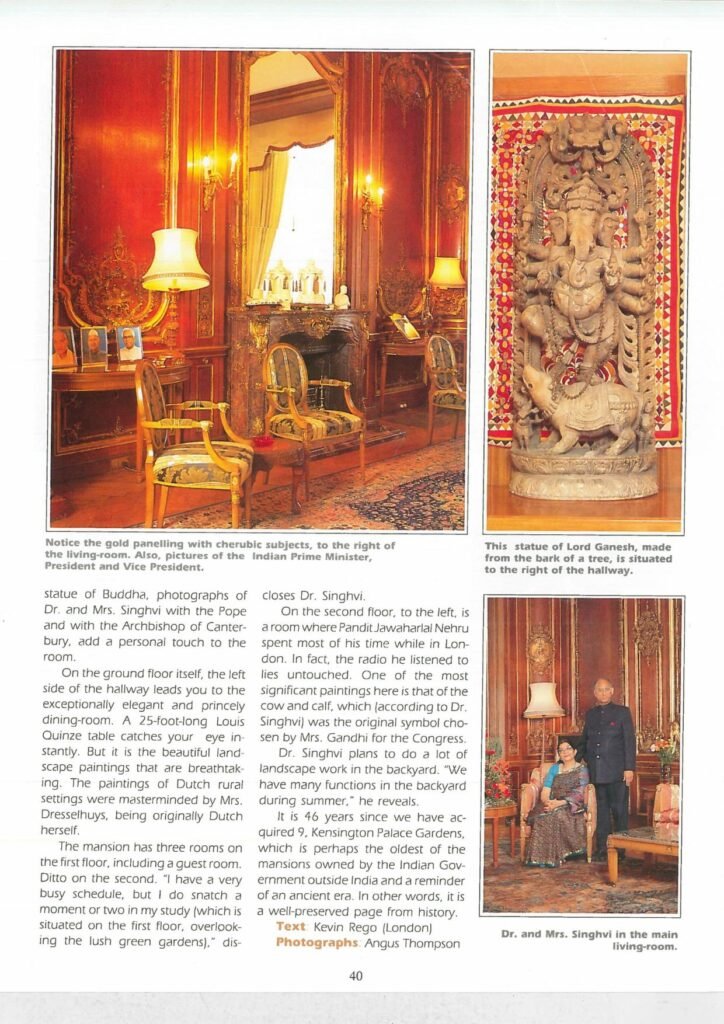
Dr. Singhvi plans to do a lot of landscape work in the backyard. “We have many functions in the backyard during summer,” he reveals.
It is 46 years since we have acquired 9, Kensington Palace Gardens, which is perhaps the oldest of the mansions owned by the Indian Government outside India and a reminder of an ancient era. In other words, it is a well-preserved page from history.
Text: Kevin Rego (London)
Photographs: Angus Thompson